Monday, April 02, 2007

THE SCRIPTURE AND THE CHURCH


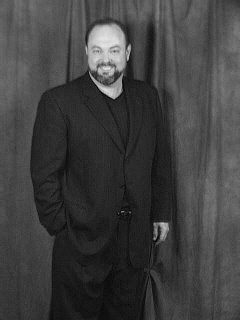
Fr. Thomas Hopko is one of my favorite Orthodox speakers. His immediate command of both theological and historical information and his disarming delivery make him a joy to hear. I've never heard one of his presentations that I haven't learned so much more than I had known before.

Plus, he has a balanced and gracious spirit that makes him hospitable to all kinds of people.

Here is a recent interview with Fr. Thomas that speaks directly to my investigation into the Church. His insight into the relationship between the Scriptures and the Church and his insight of the "organic" nature of the Church with a history is one of the strongest apologetics for the Orthodox Church as the continuation of the Church established by Christ and built on the Apostles and Prophets.


Enjoy, and a blessed Holy Week to ALL!


Commentary on social and moral issues of the day


Interview: An Orthodox Professor Ponders the Scriptures
Peter T. Chattaway


Fr. Thomas Hopko may have retired as Dean of St. Vladimir's Seminary in New York two years ago, but he still keeps quite busy. Last month, the author of numerous books and articles on Eastern Orthodox Christianity spent nearly three weeks on the road, during which time he visited churches in Victoria and Vancouver and spoke at functions hosted by Regent College, Trinity Western University and InterVarsity Christian Fellowship.

The indefatigable Fr. Hopko sat down to talk about Orthodox-evangelical relations with CanadianChristianity.com at St. Herman of Alaska Orthodox Church in Langley, B.C., after a day spent teaching children's Sunday school, preaching a sermon, and chatting with parishioners for hours during the fellowship afterwards about matters of the faith.


CC.com: A lot of people who are involved in evangelical-Orthodox dialogue -- such as Fr. Peter Gillquist and Frederica Mathewes-Green -- seem to be converts to Orthodoxy, but you are cradle Orthodox. What draws a cradle Orthodox to that sort of discussion?

Fr. Hopko: Well, I think if a person's Orthodox, hopefully whether cradle or convert, you're still very interested in Christian unity and you're very interested in making your witness to what you believe Christianity is -- which is, when all is said and done, exegesis of the Bible.
And then, of course, I love to go to those settings, because I know these people do respect the scriptures and usually know it, at least formally -- and they usually think that we don't! You know, they usually think, "Well, if you're Orthodox, you have traditions and you follow monks and elders and stuff, but you don't really know the scripture." So I like to show them that we do.
There has been a tendency of Orthodox to get away from their biblical roots, but none of the great saints and teachers ever accepted that. The very first booklet that I ever published in my life, in 1963, in my parish, was called 'Reading the Bible,' where I tried to prove to Orthodox people that to read the Bible and know the Bible is not [exclusively] Protestant. And I quoted every saint that I could who spoke about the scriptures and reading the scriptures, how the Holy Fathers were doing nothing but interpreting the scriptures. All the great theological controversies were about what the Bible taught.

So it's wrong to say, "Well, the Protestants have the Bible, but we have holy tradition" -- that's just ridiculous. Tradition is nothing other than the Bible properly exegeted and properly applied. That's how we would understand it. So I like to go among evangelicals to make that point.

CC.com: I've heard some Orthodox say that the Bible is part of tradition. It could sound like you're saying that tradition is in some way separate from the Bible, or comes after it.

Fr. Hopko: Well, I think what I would say, in three sentences, is that you first have a canon of faith that is orally delivered and preached. And that precedes whatever New Testament writings you have. But even that canon of faith is interpreting the Law, the Psalms and the Prophets, so it already has to be kata tas graphas [according to the scriptures].

I mean, St. Paul was converted by a vision, but he preached from the scripture, and he even chided people not to preach from visions and voices, in Colossians, and as soon as he had this conviction that Jesus was raised, he even says, I think in Galatians, that he went and studied the scripture and became convinced, and then he went around preaching from the scripture that Jesus was the Christ.

But then, the canon of faith, we would hold, was defended in apostolic scripture, and that would be the 27 writings of the New Testament. And there were lots of other scriptures at that point -- Gnostic and so on -- that our tradition would say were spurious, were just heretical, were wrong. So certain scriptures were canonized, but they were the scriptures that were in accordance with the canon of faith that was delivered orally. So you have in Thessalonians already, Paul speaking about "what I delivered to you both orally and in writing." So there isn't any competition between the two.

But you've got to go the next step and say, once the New Testament scriptures are canonized -- which took a couple hundred years! -- then they become the criterion by which tradition is judged. You can't have anything in church tradition that is contrary to the scriptures. You might have other things that are not specifically written there -- St. Basil speaks about oral traditions like, I don't know, using the sign of the cross or facing the east -- but they could not be contrary to what is in the scriptures.

CC.com: What do you think evangelicals see in Orthodoxy that would draw them to it?

Fr. Hopko: Two things. I think one is, evangelicals want a church that takes the Bible seriously as the Word of God, but they don't want a church where everybody can interpret it the way they want to, because I think they were frustrated over how many churches there were claiming to really follow the Bible. So they said there has to be some other criterion of exegesis than just picking up the Bible and reading it, with your Scofield commentary or something.

And then they discovered that the early Church and the Fathers were interpreting the Bible. Then they discovered that there were consensuses of interpretation. Then they discovered that there were whole councils that had battled over exegesis and had come to a common mind, and that there was like a history of exegesis from the time of the apostles that those in a certain church agreed upon, namely the one holy Orthodox Church.

So I think that they wanted the Bible -- they were convinced that the Bible was basic -- but they had a problem of how do you interpret it, and how do you maintain the proper interpretation. And then they found that the patristic and Orthodox tradition was doing that, at least in their conviction.

The other big thing is worship. You accept Jesus as your saviour, you believe the Bible is the Word of God, but then what do you do? What church do you go to? And I think for fellows like Gillquist, that was their main problem -- they said, "We all love Jesus, we all know this is the truth, but how do you worship? Where do you go? What church are you in?"

Then they came to the conclusion, if scripture is true, there's got to be a church around somewhere that's consonant with scripture, and then they became convinced it was the Orthodox.

So I think two things: biblical exegesis, a common biblical mind, and then the other was worship, a biblical worship that would be objective, Christian, communal, and that you wouldn't have to make up yourself. I think those were the two things that convinced them. And I think those are the two main cards that Orthodox would have with evangelical people.

CC.com: Is there anything the Orthodox would find appealing about evangelicalism? Does the attraction go both ways, or is it more of a one-way thing?

Fr. Hopko: I think -- I would hope -- that it would go both ways. I don't know if it often does. There was a joke that maybe contains kernels of truth, where it said, "Evangelicals come to Orthodoxy, and we teach them how to be orthodox, and they teach us how to be Christians." [laughs]

I don't know if you want to quote that. But in other words, their commitment to Christ, their zeal for Christ, their missionary enthusiasm, their enthusiasm for works of mercy -- helping the poor, the needy, sacrificing their life to mission fields -- well, Orthodoxy is definitely recharged by that, no doubt about it.

And that's incredibly admirable, because except for the Russian church, all the other Orthodox were under Islam and they couldn't do those things. The only philanthropy they could do was among their own people, and they couldn't preach at all, and they had no schools, and they couldn't even read, practically, so it's very attractive to see a very committed, vibrant, informed, people-who-memorize-the-scriptures -- I mean, that has to be inspiring.

And my own opinion is that the injection into American Orthodoxy from the evangelicals and other converts who join was a very, very critical element in the renewal of the entire Orthodoxy in America. Many, many cradle Orthodox were renewed in their faith by their contact with the evangelicals.

CC.com: Are there any concerns among Orthodox about evangelicals trying to "change" Orthodoxy?

Fr. Hopko: There are concerns. In fact, there were great fears in the beginning that these people just wanted to bring their evangelicalism into Orthodoxy and kind of teach the Orthodox how to be Christian and Orthodox and all that, and would never "get it", and that's a human concern. But I think that both faith and experience show that that was an ill-founded fear.

I was very much personally involved with Gillquist and that whole group in '86, before they were Orthodox, and they definitely had that idea -- "Oh, you know, we'll show them" -- but man, once they came in, and once they got into it, and once it went, it just worked itself out beautifully. It never was a problem. I think that everything that was of God and good, the treasures that they brought humanly speaking, were very important to Orthodox churches, but they also changed in remarkable ways themselves, probably in ways that they never would have imagined.

And I knew some people who joined the Orthodox church not liking it at all. I knew people who were at only two or three liturgies before they decided, "I have to join," and they didn't particularly like it, but they became convinced that it was the truth, and once they got in and began celebrating it organically, it kind of opened up for them. What they ultimately discovered after 10 years was far beyond what they expected that they were going to get when they first came.

There are Orientalisms in Orthodoxy that are hard on people, when they first come in, like doing prostrations in prayer, standing in prayer, using things like the sign of the cross or kissing the picture. People say, "Oh, what's that?" But it's more cultural than theological. But they get used to it after a while.

CC.com: Do you think things like that could ever be modified, in terms of church practise, when the church comes into cultures where people don't, for example, kiss as frequently as people do in the Orient, for example?

Fr. Hopko: Yeah, it could, but I think what happens is you have a culture of the Church itself, that is not bound to any human culture. The Church itself is a cultural phenomenon -- I mean, it's basically christened Judaism.

I happened to be at McGill University once when they were having one of these discussions -- they had an Orthodox priest, a Jew, an evangelical, a liberal Protestant, and a Roman Catholic, and they were talking and talking, and finally somebody in the audience raised a hand and said, "I'd like to ask that Orthodox priest a question. What religion are you closest to anyway?" And just, I guess, for the fun of it, the guy answered and said, "Judaism."

And they said, "What do you mean, aren't you Christian?" He said, "Yeah, but in our way of hearing the Bible, worshipping the way we do, you might say that we feel that sometimes we are closer to the Jews than we are to other Christians because of the way they approach the Bible, the way they approach authority, the way they approach worship," and I think there is a certain truth there.

But the Church itself has a culture. It has songs and icons and hymns and sounds. I think there is a kind of ethos, a culture of the Church itself, that is not just reducible to Slavic or Hellenic or Semitic, that people can relate to. And so a thing like giving a kiss, or making a bow, or lighting a candle -- that's kind of Church culture, it's not just human culture.

CC.com: Your remark about the Jewish parallels reminds me, a couple months ago I saw the Campus Crusade Jesus film for the first time in a long, long time, and when Jesus reads from the scriptures in the synagogue, at the end of that scene, he rolls up the scripture and kisses it -- venerates it, you could say -- and when I saw that, I wondered if the evangelicals who made this film, who wanted to be as authentic to the Jewish culture of that time as possible and showed Jesus himself doing that, ever asked themselves, "When did we stop doing that?"

Fr. Hopko: Yeah, right, right.

CC.com: These days people talk about post-modern culture and how thoughts and words are no longer enough -- we need experience now -- and the Orthodox worship has a sort of appeal there because it engages all five senses.

Fr. Hopko: Holistic, yeah.

CC.com: What would your response be to evangelicals who start using candles and incense and chants and possibly even icons -- all the accoutrements -- but without actually becoming Orthodox?

Fr. Hopko: It's interesting you should ask that, because the Evangelical Orthodox [under Fr. Gillquist] were doing that before they joined up, and I was there when they were doing it, and if you went, the ethos and atmosphere was very Protestant, but they had the words of the liturgy, they had icons.

I think Fr. Nicholas in Santa Barbara stood up that week and said the word that kind of did the trick. He said, "You can't imitate or mimic or mock the Church. You're either in it, or you're not." And Orthodoxy isn't a set of texts or a bunch of pictures -- it's a living, organic community that has texts and icons, and it's that living community where the power is that you need, and if you're not in that community, you can have the accoutrements, but you don't have the power. That's what he said.

And I think that made them realize they had to join up -- for better or worse, put up with all Orthodox ethnicisms and everything. You couldn't just imitate it, you had to be in it. Because it was a historical community, in history, that you had to enter into -- just like the Gentiles had to be grafted to Israel.

CC.com: Otherwise it just becomes the latest fad, in other words.

Fr. Hopko: Yeah, and it isn't any less individualistically self-willed than somebody who would get up in a polyester suit and necktie and bang the Bible and preach -- it's just, you happen to like these kinds of prayers and these kinds of pictures, but it's still not the Church that is doing it, it's you that's doing it.

I wrote in that book, Speaking the Truth in Love, that that individualism and self-will thing can even be very conservative. It's not always liberal to do what I feel I like to do, except my predilections happen to be for old things rather than new things, but it's still me. And the Lord said, "out of his treasure, the man brings forth things new and old," but it still has to be the Church, because it can't be mine.

CC.com: Yesterday you said Orthodoxy was not just one denomination among many. What is the dialogue with evangelicals trying to accomplish, or how do you make that point to evangelicals who do see Orthodoxy as one of many denominations?

Fr. Hopko: I deal with that issue in Speaking the Truth in Love also, because dialogical is the way that it's done. You encounter, you speak, you have to listen in order to relate, so there's always a missionary dimension to dialogue. But it's also a dimension of testimony, it's also a willingness to have yourself tested. Okay, you think that we're wrong -- say why. Let's talk about it.

If we're all Christians, we all love Jesus, we all want the truth, and we don't agree about what that is, we'd better talk about it, and try to have enough dialogue so that we know what we actually disagree about! John Courtney Murray once said, "We don't know enough about each other even to disagree accurately." We've been separated from the Latin West for 900 years!
However, there are all these dangers. The danger could be exactly toward denominationalism.

Even at Trinity Western the other night, when an evangelical who doesn't have a concept of the historical church and the sacramental church says, "I agree with everything you said," sometimes I'm tempted to say, "No you don't!" Because if you're inventing worship every week, and you don't believe that there's a church in history or that it all started in reality in the 16th century, you don't believe what we believe!

Now, the fact that we quote the Bible and talk about how Jesus saves us, you might relate to and believe in it, but the minute you come to how you access it, how it becomes yours, how you live it out -- I still think that there are incredible differences between evangelicals and Eastern Orthodox. Because for us, the Church is part of the gospel. Let me put it this way: The gospel implies the Church.

Fr. Florovsky used to talk about ecumenism in time, as well as in space. Who are you with in the past? You name any century, and we'll tell you who our guys were, and we'll tell you where we think the Church was, and we'll tell you where we think it wasn't, at least not in its fullness, where it became defective. In the early Church, we're with the so-called Catholics and not with the Gnostics and the Montanists. After the 4th century, we're with Athanasius, Basil, Gregory and the Nicene communities. In the 5th century, we're with the Chalcedonian communities, and in the later centuries, we're with Photius as against the papacy.

We have a history that we deeply identify with. We speak about Gregory and Basil as if they were our contemporaries, because mystically they are -- they are! And that's one thing that I think evangelicals, at least in their organic traditions, don't relate to.

In fact, a lot of times, as a matter of fact, they don't even know about it. They don't have the foggiest idea who these people even are. I've met United Church of Canada people who didn't know what the Nicene Creed was, and they were at a [World Council of Churches] Faith and Order Commission meeting representing their church! Seriously.

Then they say, "Why do you need it, it's Greek philosophy, it's old-fashioned, no modern person can relate to it." I remember in Russia once, I was there at a meeting exactly on the Nicene Creed, with Catholics and Protestants from all over the world -- it was an international meeting, sponsored by the Faith and Order Commission -- and the English-speaking Protestants were always on my case every day, because I could speak English, about, "Why do you do this, this is irrelevant, la la la."

And then we went to St. Sergius monastery outside Moscow, and there were all these people -- it was under Communism still -- the blind, the lame, all these people were out there in the middle of the night singing and singing, and these Protestants were out there looking at them and they're crying and saying, "I never saw such a piety," and then they said, "By the way, what are they singing?" and I said, "Well, they're just singing the outdated Nicene Creed that no one knows anything about." [laughs]

They were singing the Nicene Creed! And these people were just arguing that it's irrelevant, nobody cares about it, nobody knows what it is -- well, the one thing you had to do if you were Orthodox was to memorize the Nicene Creed and to know how to sing it. So that's the kind of thing that people find shocking.

I remember Desmond Tutu and his wife were at one service, and I heard her lean over to him and say, "I didn't know white folks could sing like this." So that's what the meetings can hopefully overcome and produce, some kind of new understanding of things, not caricatures.


Read the entire article on the Canadian Christianity website (new window will open).


Thursday, March 22, 2007

THE PROBLEM OF THE CHURCH

Fr. Stephen Freeman has writting a compelling entry to his blog "Glory to God For All Things" entiltled "The Problem of the Church."

I recommend this to you in the same spirit of my current work on the Church.

There are some practical applicatiuons to all this "theory" that I hope to continue exploring with you in the near future.

Monday, March 19, 2007

ECCLESIA PRACTICUM


As I have pondered the Church during Great Lent, I have come to appreciate that words can be quite beautiful but it is the practice of the words that reveal authentic beauty and Truth.

Just as God's wisdom found its zenith in the enfleshing of God in Christ, so we, who are called to perpetuate this physical presence of God in the earth, must also enflesh the truths we say we believe.

This past weekend I had the joy of speaking at a parish in the Chicago area. This is a vibrant parish led by one of the most authentic parish priests I have ever met. He was brilliant, fatherly, and wise. He has been the parish priest at this parish for over 40 years. That kind of pastoral care by a good man can't help but profoundly affect his congregation.

What struck me was the congregational singing and the genuine affection the people had for one another. The most amazing thing about this was that the congregational singing was in a language other than English (not glossolalia. I avoid revealing the language so as not to predjudice the reader).

After the service, the priest asked me if I had been offended by the lack of English in the service. A few years ago I would have probably said "yes," but something struck me as I stood with these fellow Orthodox believers in the Divine Liturgy. I was expereincing their communal life in that moment of corporate worship. I was in a "church." This was more than theory. This was real life. I found myself "participating" in worship at a much deeper level than I had expereinced in many other highly ethnic congregations.

The reason for this is that these people were together. They were expressing their common life together in such a way that an "outsider" would not expereince as offputting.

Had this just been the "choir" singing the hymns and providing the responses, I would have been offended. But the reason would not be so much the language issue as a theological issue. Orthodoxy is NOT a spectator's sport. We participate. This is one of the practical applications of Persons in Communion - the persons of the Church all participate in the life of the Church. This is first seen in the Christian family, then extended to the local parish, then to the diocese, to the archdiocese, to the nationa church, and ultimately to the world.

This participatory nature of authentic "ecclesia" is best summed up by the Apostle Paul when he wrote: "And He Himself gave some to be apostles, some prophets, some evangelists, and some pastors and teachers, for the equipping of the saints for the work of ministry, for the edifying of the body of Christ, till we all come to the unity of the faith and of the knowledge of the Son of God, to a perfect man, to the measure of the stature of the fullness of Christ; that we should no longer be children, tossed to and fro and carried about with every wind of doctrine, by the trickery of men, in the cunning craftiness of deceitful plotting, but, speaking the truth in love, may grow up in all things into Him who is the head—Christ— from whom the whole body, joined and knit together by what every joint supplies, according to the effective working by which every part does its share, causes growth of the body for the edifying of itself in love." (Ephesians 4:11-16, emphasis mine)

To the extent that our parishes are participatory parishes then they are expressions of an Orthodox ecclesiology. To the extent that they are not participatory then, well....

Next - The Second Practical Application of an Orthodox Ecclesiology!

Thursday, March 08, 2007

PERSONS IN COMMUNION


In St. John 17 our Lord Jesus prays what New Testament scholars have called the "High Priestly Prayer," and in this prayer, our Lord, before He goes to the Cross, asks the Father that His people "may be one as We are." (John 17:11)

In fact, Jesus asks the Father to make His disciples one as He and the Father are one three times, once in John 17:11, then again in 17:21 and 17:22. Three times the Lord asks the Father to make His people one like the Father and the Son are one.

No wonder a clear, faithful, and patristic understanding of the mystery of the Trinity is necessary before anyone can appreciate the mystery of the Body of Christ.

So, the standard of the Body of Christ, the Church, is set by Christ Himself. The goal, the work, the path, the point of the Church is to experience the unity that the Father and the Son have experienced forever. This is the invitation to "mere" mortals. This is the adventure and the purpose of the Church, to be one as the Father and the Son are one. This level of unity is not simple agreement on a cause or goal, but goes beyond an association to the heart of mystery and awestruck wonder.

It is no mistake that it was contemplating this prayer of Jesus on behalf of His Church that first got me to abandon the notion of Church as the assembling of individuals to learn how to be Christian, or get "fired up" for the Lord.

No, nothing less than a willingness to jettison this "small" vision of the Church will help us see the grandeur and majesty that we are each called to experience as persons in communion in the Church.

This means the Church is not some accident of eschatology, or some parenthesis in God's timetable, but the very reason Christ came to the earth, to establish His Church, His mystical Body, His Kingdom on earth. It is this majestic understanding of the Church that makes sense of the salvific work of our Lord Jesus to redeem humanity and conquer death.

To enter into this vision of the Church requires me to also re-evaluate my own anthropology. What is a human?

It was coming to see a distinction between "person" and "individual" that began to open my own soul to this divine mystery of the Church. It was as I began to apply the patristic understanding of the Trinity to anthropology that a clear distinction was made between being an individual and being a person.

Metropolitan Zizioulas in his book "Being As Communion" declares that the very heart of authentic personhood is communion, that one cannot be an authentic person outside of a communion relationship. the metropolitan draws this from the mystery of the Trinity and the divine Persons in Communion. The Father cannot be eternally the Father without an eternal Son. The Spirit is eternally proceeding from the Father and His Personhood is bound up with His relationship between the Father and the Son. The divine Persons are known and know in relation to each Other.

This gets a bit esoteric for me at times, but the heart of this is the incredible message that we, created, humans are invited by God's grace to experience this kind of communion between each other and with the Holy and life-creating Trinity.

And it is precisely this invitation, this "Good News", that makes sense of Christ's birth, life, death, burial, resurrection, ascension, and second coming. All of His salvific work is tied up in moving us from disconnected, cut-off, dead and dying, slaves to our own selfishness, to the deifying communion of His eternal, new Life.

Standing on the precipice of my own self-centered ego, I confess a fear of looking too long at this mystery. It is still too bright for me, and this truth judges my own struggles with self-deception, hiding, and fear of being "taken advantage of." My self-schisms, my own disjointed heart is manifested in the disjointed relationships around me, ultimately seen in my continual struggle to be "in communion" with Christ and His Church.

I confess this subject is getting the better of me. I was hoping to make these works a few treatise on ecclesiology, but Great Lent has captured me and insisted that I risk honesty for my own salvation. It is the Church that I need. It is the Church that I must attain. It is the Church that will be to me my Anchor and Salvation. It is the Church or the hell of eternal fragmentation in my own soul and in my relationships with others and, ultimately, my relationship with God Himself.

“I am the true vine, and My Father is the vinedresser. Every branch in Me that does not bear fruit He takes away; and every branch that bears fruit He prunes, that it may bear more fruit. You are already clean because of the word which I have spoken to you. Abide in Me, and I in you. As the branch cannot bear fruit of itself, unless it abides in the vine, neither can you, unless you abide in Me. “I am the vine, you are the branches. He who abides in Me, and I in him, bears much fruit; for without Me you can do nothing. If anyone does not abide in Me, he is cast out as a branch and is withered; and they gather them and throw them into the fire, and they are burned. 7 If you abide in Me, and My words abide in you, you will ask what you desire, and it shall be done for you. By this My Father is glorified, that you bear much fruit; so you will be My disciples." (John 15:1-8)


Thursday, March 01, 2007

SIGNS OF THE TIMES

Thanks to Fr. John at his blog Conversi ad Dominum for this great link!

Signs of the Times

Now all we need is an Orthodox sign to add to the dialogue!

Enjoy and a blessed Lent to you all.

B

Wednesday, February 21, 2007

THE ASSEMBLY AND THE TRINITY


As I have worked on a few thoughts about ecclesiology, I have become overwhelmed by the absolute necessity of a patristic understanding of the dogma of the Trinity as foundational to any discussion of the Church.

But not dogma from a rationalistic or purely academic posture. Actually the Orthodox understanding on doing theology as primarily doxalogical and liturgical is also fundamental to beginning to grasp the patristic understanding of the Church.

In other words, we have to pray the Trinity to begin to appreciate just why this dogma is foundational to any understanding of ecclesiology.

I will go so far as to say that until we treat theology as primarily a doxalogical reality, we will be constantly tempted to reduce these theological truths to mere rational propositions. Which, in turn, will place us as more likely to miss the point of the dogma of the Trinity all together.

Having said that, please note the corporate nature of this way of doing theology. A wise Orthodox theologian once said "You never pray alone." In the very practice of communal prayer and worship we see a hint of the foundational nature of the Trinity in understanding the Divine Mystery of the Church. It is this Orthodox commitment to the ecclesia that both reveal and challenge.

It reveals the nature of the oneness of the dogma of the Trinity in the sense that each Person shares completely the Divine Nature. Father, Son, and Holy Spirit are one God, not three gods, but one God in three Persons.

However, the unity of the Trinity does not rest in the one Divine Nature, but the One Father. There is one God because there is one Father. The oneness of God rests on the Person of the Father, not on the impersonal distinction of divine nature.

Another saint reminded us that we can "neither confuse the Persons, nor divide the Essence." And here again we see the foundational nature of the Trinity on the theology of the Church. As persons in communion with Christ and one another, we all share the common human nature, but the uniqueness of our persons are not swallowed by this common nature.

In a mystery, in the Church, we each form parts of the Whole without losing the uniqueness of our person. Very much like the Father, Son, and Holy Spirit are both One and Three, we also, when entering the Church, participate in a mystery in this divine communion.

I want to say a great deal more on this, and I confess that this may be a subject beyond my abilities, but it has captured my imagination and I want to see where this takes me. Your wisdom and correction are greatly appreciated.

Wednesday, February 07, 2007

A POTTERHEAD

By way of explanation, the two widgets to the left are my homage to the last Harry Potter book coming out on July 21st (Yes, I have pre-ordered) and the 5th movie coming out a week before.

I have enjoyed the Potter series of books and find them to contain not only entertaining work but insight into virtues seemingly missing from today's world.

Not meant to start a flame war over the value of Potter books, just a short comment about why I've added these countdowns to my blog.

B

BASIC PRINCIPLES OF CHURCH


As I have begun researching for a few articles on the Church and Orthodox ecclesiology, I have come to one over riding conclusion - the absolute necessitty of an Orthodox understanding of the mystery of the Holy Trinity is the very foundation of Orthodox ecclesiology.

Lossky wrote:

The Trinity is, for the Orthodox Church, the unshakable foundation of all religious thought, all piety, of all spiritual life, of all experience. It is the Trinity that we seek in seeking after God, when we search for the fullness of being, for the end and meaning of existence. . . . If we reject the Trinity as the sole ground of all reality and of all thought, we are committed to a road that leads nowhere; we end in aporia, in folly, in the disintegration of our being, in spiritual death. Between the Trinity and hell, there lies no other choice. . . . The revelation of the Trinity shines out in the Church as a purely religious gift, as the catholic truth above all others.

So, the revelation of the Holy Trinity is absolutely essential if we are going to understand the Orthodox teaching of ecclesiology. In fact, Orthodox presupposes an Orthodox view of the Holy Trinity as the foundation of all theological discussion.

What do we mean when we say "the mystery of the Holy Trinity?" Well, it isn't a puzzle to be solved, or a riddle to be deciphered. When we say mystery, we are saying "the more we know, the more we recognize that there is more to know."2 God will always be beyond us, but we can know Him in a personal way. An ancient Orthodox saint (St. Isaac the Syrian, 4th century) said, "By love, God can be held, but by thinking, never!"

Does this mean there nothing we can reasonably know or understand about God? Of course there is.

There is an understanding we can receive when it comes to the great mysteries of our faith. But it is not based on or limited to our rational faculties. It includes our powers of reasoning ("Be transformed by the renewing of your mind"—Romans 12:2), but it far transcends them. It is an "understanding," a "knowing" that comes from love and trust, from a living communion with God, Who alone is Truth, the creator and sustainer of our minds and reasonings.

Don't be scared by the use of the word mystery. It is used to humbly proclaim that we don't (and can't) know every thing about God. Some mysteries have been revealed (Eph. 3:2-6), and some will be revealed. God can never be completely known and understood by human minds; we will be learning about him unto the “ages of ages.” A little-known Christian layman, Minucius Felix, wrote in A.D. 218:

He cannot be seen, for He is too bright for sight; nor can he be grasped, for He is too pure to touch; nor can He be measured, for He is too great for the senses. He is infinite and cannot be measured; and how great He is, is known to Himself alone. Our heart is too narrow to understand Him; and therefore we take His measure worthily by saying that He is immeasurable.

Although God is mysterious, He has revealed Himself to us. In theological terms, we say God is transcendent and immanent—He is both far away and near. Bishop Kallistos Ware sums it up best:

These, then, are the two "poles" in man's experience of the Divine. God is both further from us, and nearer to us, than anything else. And we find, paradoxically, that these two poles do not cancel one another out: on the contrary, the more we are attracted to the one "pole," the more vividly we become aware of the other at the same time. Advancing on the Way, each finds that God grows ever more intimate and ever more distant, well known and yet unknown—well known to the smallest child, incomprehensible to the most brilliant theologian. God dwells in "light unapproachable," yet man stands in His presence with loving confidence and addresses Him as friend.

That is why the mystery of the Holy Trinity is said to be the model of conversion (metanoia) and a cross for humanity. No one can come face to face with this blessed Truth and not fall down in worship. It is like Isaiah when he saw the Lord high and lifted up. The only proper reaction is awe-struck adoration. This Great Mystery forces prideful man to repent (to change his mind). We are called, when confronted with this Great Mystery, to change our minds, change our habitual ways of thinking, and be converted.

Here is the foundation of ecclesiology. The Church as the Body of Christ is directly related to how we view the Holy Trinity.

More to come.

Monday, February 05, 2007

ACCEPTED


Well, gentle reader, I have just received my acceptance letter from Holy Cross Greek Orthodox School of Theology in Brookline, MA. It looks like I am definitely Boston bound this Fall.

I confess I am filled with trepidation at the prospects of uprooting my little family and heading north to the People's Republic of Massachusetts, but I am more fearful on not following through with this to finally explore this calling to the clergy I have had since I was a boy.

Not only will this Southern born and Southern bred convert be entirely too far above the Mason-Dixon, but I will also be among a group of Orthodox Christians I had always tried to avoid - the Greeks.

I had believed all the horror stories about the Greek Archdiocese I heard before my conversion. How they were so ethnic, so insular, and would swallow me whole. It was the equivalent of the "Bogey-man" stories I was told as a child to keep me from wandering into the woods near my home. The stories worked.

But now I find myself married to a beautiful Greek girl, attending a GOA parish here in Ft. Lauderdale, regularly speaking in GOA parishes across the country, and now about to attend the GOA seminary in Boston.

How did this happen?

I think, (pray) it happened for two specific reasons.

First, I believe God desires me to abandon attitudes that are primarily based on fear. To be sure, I have found examples of all the bad behaviors and backward attitudes I was warned about concerning the Greeks, but I have found many more examples of just the opposite among these dear people. I have found genuine Orthodox faith and zeal for the faith that is not solely about preserving an ethnic heritage. I have discovered in even the most "Greeky Greek" parish people who come up to me after I speak and tell me "we need more challenges to grow in our faith." God has me here among a group I had feared would be nothing more than an ethnic social club to reveal to me my own ethnocentric attitudes and my own poverty of heritage.

Second, I believe God placed me among the Greeks to help me develop a true Orthodox mindset. Say what you will about the ethnicity of the Greeks, but when a Greek or Greek-American gets the faith, it is a solid and consistent Orthodox mindset. Now this may very well be true of a Russian or Arab mind as well, but I wouldn't have been as surprised by that as I have been when it comes to the Greeks.

It turns out the Greeks are their own harshest critics. Those among them who see the beauty of the faith and then see the average person in a parish as so ignorant of their faith, truly seeks ways to remedy this sad spiritual poverty. More than once, I have heard accurate and unvarnished critiques from Greek Orthodox laity and clergy alike. They know their problems better than anyone else.

However, I have also spent the past 4 years of my life working in a pan-Orthodox media ministry and have discovered that if it weren't for the Greek Archdiocese, so maligned among other jurisdictions, there would be no OCMC. There would be no IOCC. And there would be no OCN. None of the other Orthodox jurisdictions have supported the work of OCN like the Greek Archdiocese and average Greek Orthodox laypersons. If I could get the other jurisdictions to proportionally give toward this ministry like the GOA has given, we would be much further along than we are as a national media ministry.

So, does the GOA have problems? Of course they do. Are they too ethnocentric? No more than other parishes with a particular dominance of a particular ethnicity, including convert parishes who are more interested in creating another ethnic clique out of our American experiences.

For my salvation, God has graciously led me to serve in the Greek Orthodox Archdiocese of America. By God's grace and in His time if He gives me the grace of the priesthood, I will serve a GOA parish. If God is merciful, it will be in the Metropolis of Atlanta, so I will not have to be exiled from my beloved South too long. I am grateful to the Greek Archdiocese for its support and I will not bite the hand that feeds me, nor will I reject the authentic Orthodox witness and the potential for much more that I have happily discovered here among the Greeks.

May God grant many years to my beloved Metropolitan ALEXIOS and may his tribe increase!

Thursday, January 25, 2007

MAKE A JOYFUL NOISE


I have a confession to make. I have been allowing life to interfere with my blogging. Sorry for the lack of updates! :-)

I am enjoying working on the articles about the Church. The more I contemplate this awesome mystery, the more I find that I have to learn. The divine mystery of the Church is meant for my salvation. It isn't meant to create an organizational structure for some utilitarian reason. It is meant to be an icon of Christ and His Kingdom.

More on this later.

As I am researching these articles, we are in the middle of the launch of The Ark, our new 24 hour radio outreach on the Internet. It is very much a work in progress.

Some have questioned the very idea of "contemporary Orthodox Christian music." I understand their concerns. I came from a Christian world dominated by "Jesus is my girlfriend" music. It was sappy, sentimental, and shallow, Yuk! However, I also remember contemporary music that drew me to adore God.

As for contemporary Orthodox Christian music, we are learning all the time of sincere and thoughtful Orthodox Christian musicians who are attempting to use the depth and beauty of the "sublime theology" of the Church to craft songs that reveal Orthodoxy to a generation of people who have never had it before. This music can be a bridge for folks who have never heard of the Orthodox faith. It can also be a bridge to nominal Orthodox people who are still ignorant of the treasure they were born in to.

At the very least, it is an alternative for our Orthodox people to the stuff they are bombarded with every day.

Some may suggest that we do nothing but bask in the rich liturgical sounds of the faith at all times, and I welcome their voice, but perhaps there is more to be said here.

I'd like to hear from you about this. What dangers do you see? Is there a chance that some converts from Evangelicalism are over reacting to something that reminds them of the world they left? Is there anything in contemporary music that can be redeemed by the faith?

Maybe you have other questions. I'd like to hear your thoughts. Just make sure they are respectful and helpful.

Barnabas

Friday, January 19, 2007

SHARE THE LIGHT SUNDAY

While I work on my articles concerning the Church, I wanted to update the site about something happening in our Orthodox churches here in America.

As some of you know, I am the development director for Orthodox Christian Network. OCN is a SCOBA agency that is responsible for creating a national, sustainable, and effective media witness for the Church here in the US. We currently produce and syndicate the weekly half hour radio program called "Come Receive The Light" across the country (soon to launch in Houston in February!).

Our SCOBA hierarchs have declare the third Sunday in January national "Share The Light Sunday" for all our Orthodox parishes across the nation. Here is an excerpt from their recent Encyclical:

But the day and age in which we live offers us so many ways to effectively communicate the message of faith to our neighbors and families. We live in an age when communication technologies have expanded our ability to raise awareness of our Orthodox faith as never before. Technologies like the internet, podcasting, cell phones, as well as TV, radio, and print, challenge us to take advantage of these new tools to obey the command of the Savior. These
technologies are already being used by many to communicate to our children and grand children, and those messages, some good and some not so good, are affecting our lives every day. Where is the sweet, balanced, and salvation bearing voice of Orthodoxy in this modern cacophony of messages?

It is because of this unprecedented opportunity to serve the local parishes through media that we have set aside the third Sunday in January as Share The Light Sunday. This year it falls on Sunday, January 21, 2007, and we urge each parish to enthusiastically participate by passing a special tray on this Sunday to help us build a national, sustainable, and effective media witness for our Orthodox Churches.

Let us together take up these valuable talents and use them faithfully to serve one another and this nation, and together we will hear from our Lord “Well done.”

Here at OCN we are also excited to be launching The Ark on this same Share The Ligth Sunday. The Ark is going to be a 24 hour internet radio outreach that will feature contemporary Orthodox Christian artists like Fr. Peter Jon Gilquist, Fr. Justin Matthews, Jimmy Santis, Eikona, Monica Matthews, and Ron Moore. For too long these talents Orthdoox musicians had few outlets to help us contextualize the beauties of Orthodoxy for this music-centered culture.

You will be able to hear The Ark on our web site receive.org. I hope you'll listen and give us some feedback about our initial efforts.

We are working hard to use media in constructive and challenging ways to raise the awareness of Orthodoxy in the lives of everyday Americans, and to support the faithful as they live in a culture all too often shaped by the exact opposite of Orthodox Christianity.

Please pray for OCN this weekend that we will be faithful to the Master with the talents He has given us.

Tuesday, January 16, 2007

AND THEY WAITED

Dear Ones,

Please forgive the lack of updates. Life has been interfering with my blogging.

I do hope to have something later this week on the Church. Thanks for visiting and thanks for commenting. This is both educational and edifying to me.

B

Monday, January 08, 2007

SEEKING AND FINDING THE CHURCH

George Barna has just released a new "Barna Update" about house churches as oppossed to conventional churches.

In this most recent study by Barna, he continues his crusade to highlight what he calls "new forms of the Church" that he suggests is the wave of the future (see his book Revelution: The New Church: Understand It).

Having had my "home church" phase, I'd like to suggest that this phenomenon occuring now is simply another symptom of the perpetually weak ecclesiology to be found in Evangelicalism. This ecclesiological weakness is a constant preassure on Evangelicalism to find the "new way" to do Church. This eternal "tail chasing" in an attempt to keep up with cultural and sociological shifts means that the ground is always shifting under the Evangelical's feet.

What motivates this perpetual search for the Church? I believe many of these sincere believers are looking for authentic Church. Every new "reform" movement in modern Evangelicalism had at its heart a desire for the Church. From the "Body Life" movement of the 60's and 70's, to the "Shepherding movement during the "Jesus Freak" years, to the ebb and flow of popularity of "house churches," seeking believers intuitively understand that there is something wrong with current church life.

This unease with the Church experience of many Evangelicals is primarily a theological problem.

A recent talk given by Terry Mattingly entitled "So What Do Converts Want, Anyway?" really gives language to what many Evangelicals are struggling with when it comes to church life. These concerns are really what sends a good number of converts to the Orthodox Church from Evangelicalism.

But at the heart of this longing is a theological issue: Where is the Church? Perhaps even a more elementary question is being asked: What is the Church?

These struggles may manifest themselves as a longing for intimacy, a search for genuine accountability, or even a desire for a sense of significance. Believers will seek to satisfy this sense of loss by trying "new forms of church." They will seek answers in estatic expereriences and religious fervor. They will change denominations, churches, even cities, trying to scratch the "itch" of the Church.

Some will settle on some form of expereince that at least "helps." Orthers will, tragically, conclude that there is no such thing as "Church" and will give up the search.

But the answer lies in a willingness to discover that which has always been true - the Church established by Christ, built on the foundation of the Apostles and the Prophets, and birthed at Pentecost is an observable, tracable, and avaiable reality today. It will require some effort and humility, but we can know where the Church is and what the Church is!

I'd like to write a few articles in the coming days concerning ecclesiology. The good news is we are not left to our own devices. We can learn about how the Church has known Herself through the centuries, and we can flee to the arms of this indispensible Mother.

As a wise father once said "You cannot have God as your Father without the Church as your Mother."

Sunday, December 31, 2006

BEHOLD ALL THINGS ARE MADE NEW


Exterior journeys often reveal the need in my own heart for interior, spiritual journeys, and this road trip I am now completing is no exception.

But lately I've been dwelling on the passage in 2 Corinthians 5:17 - Therefore, if anyone is in Christ, he is a new creation; old things have passed away; behold, all things have become new.

Here we are at the end of one calendar year and at the beginning of another and I am longing for "newness." This longing is both a desire for escape (bad) and renewal (good). I long for newness to escape the effects of all my "oldness," my old ways, passions, and attitudes - all a result of my own slavery to survival as opposed to true life. My selfish desire is for a "clean slate" so I can instantly escape the consequences of my past behavior and sinfulness.

But St. Paul is talking about a new kind of "newness." He means a newness that is rooted in a relationship with Fire Himself. It is an invitation to the Divine Furnace of unconditional love. It is a challenge to enter "into" Christ, to "dare to call upon God as Father and to say - Our Father Who art in heaven..." This "newness" is a place of perpetual "newness," a place where I AM new eternally in Christ, a place of eternal renewal. Every event, every behavior, every thought, attitude, and action is always new in this Fire.

Terrifying, isn't it, and compelling.

To enter this newness will mean "old things" MUST pass away. They must become what they are - death. They must be allowed to be dropped as the weights they are and to rot and decay, because they have the fatal flaw of the fallen - they are disconnected from eternity, and any attempt to bring them with me will doom my own journey into this "newness."

Here I stand at a new year. This moment is new. It has never existed before and when it is passed it will never exist again. Only that which shares in Christ - The One New Man - will be able to pass from this fleeting moment into eternity. All else will participate in that death that is the second death.

I am invited by Christ to enter Him and His eternal newness. This will be a lifelong journey and it will cost me everything I have and am. Far from being some magical, instantaneous transfer, this will be an eternally new entering with every choice, every thought, and every prayer. Perpetual hope and challenge, but without even a whiff of despair because He loves me more than I, myself, know how to love.

Come, all the brave among you, let us enter the Furnace of this newness with fear and joy.

Happy New Year!


Friday, December 29, 2006

SIGN UP FOR EMAILS

If you look right below my stat counter logo, you will notice a new serivce here at Sober Joy!

It's FeedBlitz.

If you add your email in the box provided, you can have the posts from Sober Joy emailed to you when they are updated.

I hope this makes keeping up with the blog easier for you. Let me know what you think.

Barnabas

Friday, December 22, 2006

HAVE YOURSELF A MERRY LITLE CHRISTMAS

Well, gentle reader, the Powell family is off on a visit to extended family to celebrate the Birth that changed the cosmos.

I will be forgoing updating for the next several days but will renew our little visits after a short holiday break.

By the way, thank you for coming by and thanks also for those who've requested republication permission for church bulletins and papers. Please feel free to use what you wish with proper attribution to my little slice of the blogosphere.

I beg your prayers as we travel and rest assured you remain in ours.

Once again to Bethlehem, dear ones, with an expectant eye toward the eastern sky.

Merry Christmas,
Barnabas

Thursday, December 21, 2006

LOOK HOW SMALL GOD HAS MADE HIMSELF


We are almost at the Manger. Soon we will hear the joyous announcement that "Christ IS born!" Soon the time for feasting will have arrived. Soon, the Bridegroom will return and His Bride will have made herself ready!

Soon!

Until then, please join me in contemplating the "smallness" of God. Read Fr. Stephen's post and let's consider our need for smallness and weakness.

It is said that the angels of heaven peered over the edge of heaven the day Jesus was born and looked into the manger. One angel turned to the other and said “My, look how small God has made Himself.”

A blessed Nativity to you all.

Barnabas

Tuesday, December 19, 2006

O VIRGIN THEOTOKOS


The icon above was instrumental in helping me overcome a very Protestant mindset about Mary.

And, as usual, it was in answer to the question Christ put to His disciples that brought me to this epiphany: "Who do you say that I am?" If Jesus is fully God and fully man, then His mother is Theotokos, as the 4th Council at Chalcedon declared.

And if Jesus IS God in the flesh, then the womb of this woman was "more spacious than the heavens." I truly love the theology tied to the Incarnation and Mary precisely because it fills up my realization of Who Jesus IS.

Evangelicals worry that devotion and contemplation of Mary will detract from Jesus, and this is a danger, but since when did we allow truth to be sacrificed for "safety?" Doing theology is inherently dangerous. We handle truths that are always too big for us, any of us. We deal with the "fire" of the Uncreated energies of God Himself. It is always dangerous to do theology. Always!

But that authentic danger should not keep us from the sublime theology that expands our souls and calls us to deeper faithfulness to Christ.

And the danger is not diminished if we retreat to perceived "safe" positions. In fact, the danger there is that we will open the door to a watered down Christology just as we were working hard to "protect" our devotion to Jesus alone.

But Christ is never concerned about devotion and honor shown to His Mother. In fact, His last act from the Cross was to give her as mother to all His disciples when He entrusted her care to St. John. In that act Jesus shared His mother with all His disciples through the ages.

Thankfully, some Evangelicals and even some Pentecostals are re-discovering the value of Mary in devotion and honor. A TV preacher I heard recently was strongly admonishing his audience to remember the faithfulness of Mary, and the fact that she was the most unique woman who ever lived. He commented that Jesus was "with" the disciples, but He had been inside Mary. That bond lasted right up to Calvary's cross. As he put it: "From the Manger to the Mountain." But then this Pentecostal preacher added something else that brought tears to my eyes.

He went on to talk about the day of Pentecost and how the Holy Spirit descended on all the Apostles. He said for them it was a first time experience having the Holy Spirit overshadow them and fill them, but Mary looked around and said "I know this Presence."

This certainly is a less theologically precise way of saying deep theological truths, but the very fact that it is being said at all is such a source of joy.

As we approach the Manger, dear ones, let's stop and sing with the Church:

O Virgin Theotokos, Rejoice, O Mary full of grace.
The Lord is with you.
Blessed are you among women
And blessed is the fruit of your womb
For you have borne the Savior of our souls

Holy May, Mother of God, pray for us that we too might conceive in our bodies the Lord Jesus, and that we might also attain unto God. Amen

Wednesday, December 13, 2006

ARE YOU SAVED

I want to draw your attention to a wonderful article on Fr. Stephen's blog entitled "Are You Saved."

It has generated quite a discussion and I find the talk about the Orthodox view of salvation very encouraging.

The contemporary reduction of all things theological to the size of a bumper sticker creates so many problems for us. This reduction, all in the name of simplicity, has so stripped the Christian message of meat as to leave nothing left but the memories of past glory. We must reject the temptation to minimize our theology.

It is difficult and it is hard and it is dangerous, but this theology is the ultimate human work, so it should be challenging. Let's do the work, folks.

Please stop by and learn.

Monday, December 11, 2006

WHERE IS THE CHURCH


Former Lutheran pastor John Fenton, has a thought provoking article on his blog about his journey to Orthodoxy.

In it he is asked the question "Where is the Church?"

For me, this is a fundamental question that has a real answer.

You see, for me, my own spiritual journey brought me to the same place. For years I believed the Church was "invisible" made up of all those who claimed Jesus as their Savior and had accepted His lordship over their lives.

While this pietistic theory of ecclesiology seemed to serve me well, it eventually has to end in heresy because the Church IS the Body of Christ. Christ is fully God and fully man. He was visible and real during His earthly ministry, and His Body still maintains these characteristics of reality - visibility and authenticity.

To suggest otyherwise is to toy with the heresy of docetism.

Ecclesiology is the "undiscovered country" for most of Protestantism, and specifically Evangelicalism and Pentecostalism.

When one confronts the issues related to this primary question "Where is the Church?" one will begin to see other issues become clearer.

Ultimately, this question, as with most other questions of theology end up with the Person of Jesus Christ. All heresies somehow attempt to distort Who Jesus Christ is or to deny Him. The issue of ecclesiology is no different. A weak ecclesiology WILL result in a weakened Christology, and that "corruption" will eventually make its way into the everyday lives of believers.

What we believe theologically always incarnates itself in our behavior. That's why we will come to the final judgement as either "sheep" or "goats." What we already "are" will only be revealed there, not imposed there.

Lord, have mercy.