Monday, February 05, 2007

ACCEPTED


Well, gentle reader, I have just received my acceptance letter from Holy Cross Greek Orthodox School of Theology in Brookline, MA. It looks like I am definitely Boston bound this Fall.

I confess I am filled with trepidation at the prospects of uprooting my little family and heading north to the People's Republic of Massachusetts, but I am more fearful on not following through with this to finally explore this calling to the clergy I have had since I was a boy.

Not only will this Southern born and Southern bred convert be entirely too far above the Mason-Dixon, but I will also be among a group of Orthodox Christians I had always tried to avoid - the Greeks.

I had believed all the horror stories about the Greek Archdiocese I heard before my conversion. How they were so ethnic, so insular, and would swallow me whole. It was the equivalent of the "Bogey-man" stories I was told as a child to keep me from wandering into the woods near my home. The stories worked.

But now I find myself married to a beautiful Greek girl, attending a GOA parish here in Ft. Lauderdale, regularly speaking in GOA parishes across the country, and now about to attend the GOA seminary in Boston.

How did this happen?

I think, (pray) it happened for two specific reasons.

First, I believe God desires me to abandon attitudes that are primarily based on fear. To be sure, I have found examples of all the bad behaviors and backward attitudes I was warned about concerning the Greeks, but I have found many more examples of just the opposite among these dear people. I have found genuine Orthodox faith and zeal for the faith that is not solely about preserving an ethnic heritage. I have discovered in even the most "Greeky Greek" parish people who come up to me after I speak and tell me "we need more challenges to grow in our faith." God has me here among a group I had feared would be nothing more than an ethnic social club to reveal to me my own ethnocentric attitudes and my own poverty of heritage.

Second, I believe God placed me among the Greeks to help me develop a true Orthodox mindset. Say what you will about the ethnicity of the Greeks, but when a Greek or Greek-American gets the faith, it is a solid and consistent Orthodox mindset. Now this may very well be true of a Russian or Arab mind as well, but I wouldn't have been as surprised by that as I have been when it comes to the Greeks.

It turns out the Greeks are their own harshest critics. Those among them who see the beauty of the faith and then see the average person in a parish as so ignorant of their faith, truly seeks ways to remedy this sad spiritual poverty. More than once, I have heard accurate and unvarnished critiques from Greek Orthodox laity and clergy alike. They know their problems better than anyone else.

However, I have also spent the past 4 years of my life working in a pan-Orthodox media ministry and have discovered that if it weren't for the Greek Archdiocese, so maligned among other jurisdictions, there would be no OCMC. There would be no IOCC. And there would be no OCN. None of the other Orthodox jurisdictions have supported the work of OCN like the Greek Archdiocese and average Greek Orthodox laypersons. If I could get the other jurisdictions to proportionally give toward this ministry like the GOA has given, we would be much further along than we are as a national media ministry.

So, does the GOA have problems? Of course they do. Are they too ethnocentric? No more than other parishes with a particular dominance of a particular ethnicity, including convert parishes who are more interested in creating another ethnic clique out of our American experiences.

For my salvation, God has graciously led me to serve in the Greek Orthodox Archdiocese of America. By God's grace and in His time if He gives me the grace of the priesthood, I will serve a GOA parish. If God is merciful, it will be in the Metropolis of Atlanta, so I will not have to be exiled from my beloved South too long. I am grateful to the Greek Archdiocese for its support and I will not bite the hand that feeds me, nor will I reject the authentic Orthodox witness and the potential for much more that I have happily discovered here among the Greeks.

May God grant many years to my beloved Metropolitan ALEXIOS and may his tribe increase!

Thursday, January 25, 2007

MAKE A JOYFUL NOISE


I have a confession to make. I have been allowing life to interfere with my blogging. Sorry for the lack of updates! :-)

I am enjoying working on the articles about the Church. The more I contemplate this awesome mystery, the more I find that I have to learn. The divine mystery of the Church is meant for my salvation. It isn't meant to create an organizational structure for some utilitarian reason. It is meant to be an icon of Christ and His Kingdom.

More on this later.

As I am researching these articles, we are in the middle of the launch of The Ark, our new 24 hour radio outreach on the Internet. It is very much a work in progress.

Some have questioned the very idea of "contemporary Orthodox Christian music." I understand their concerns. I came from a Christian world dominated by "Jesus is my girlfriend" music. It was sappy, sentimental, and shallow, Yuk! However, I also remember contemporary music that drew me to adore God.

As for contemporary Orthodox Christian music, we are learning all the time of sincere and thoughtful Orthodox Christian musicians who are attempting to use the depth and beauty of the "sublime theology" of the Church to craft songs that reveal Orthodoxy to a generation of people who have never had it before. This music can be a bridge for folks who have never heard of the Orthodox faith. It can also be a bridge to nominal Orthodox people who are still ignorant of the treasure they were born in to.

At the very least, it is an alternative for our Orthodox people to the stuff they are bombarded with every day.

Some may suggest that we do nothing but bask in the rich liturgical sounds of the faith at all times, and I welcome their voice, but perhaps there is more to be said here.

I'd like to hear from you about this. What dangers do you see? Is there a chance that some converts from Evangelicalism are over reacting to something that reminds them of the world they left? Is there anything in contemporary music that can be redeemed by the faith?

Maybe you have other questions. I'd like to hear your thoughts. Just make sure they are respectful and helpful.

Barnabas

Friday, January 19, 2007

SHARE THE LIGHT SUNDAY

While I work on my articles concerning the Church, I wanted to update the site about something happening in our Orthodox churches here in America.

As some of you know, I am the development director for Orthodox Christian Network. OCN is a SCOBA agency that is responsible for creating a national, sustainable, and effective media witness for the Church here in the US. We currently produce and syndicate the weekly half hour radio program called "Come Receive The Light" across the country (soon to launch in Houston in February!).

Our SCOBA hierarchs have declare the third Sunday in January national "Share The Light Sunday" for all our Orthodox parishes across the nation. Here is an excerpt from their recent Encyclical:

But the day and age in which we live offers us so many ways to effectively communicate the message of faith to our neighbors and families. We live in an age when communication technologies have expanded our ability to raise awareness of our Orthodox faith as never before. Technologies like the internet, podcasting, cell phones, as well as TV, radio, and print, challenge us to take advantage of these new tools to obey the command of the Savior. These
technologies are already being used by many to communicate to our children and grand children, and those messages, some good and some not so good, are affecting our lives every day. Where is the sweet, balanced, and salvation bearing voice of Orthodoxy in this modern cacophony of messages?

It is because of this unprecedented opportunity to serve the local parishes through media that we have set aside the third Sunday in January as Share The Light Sunday. This year it falls on Sunday, January 21, 2007, and we urge each parish to enthusiastically participate by passing a special tray on this Sunday to help us build a national, sustainable, and effective media witness for our Orthodox Churches.

Let us together take up these valuable talents and use them faithfully to serve one another and this nation, and together we will hear from our Lord “Well done.”

Here at OCN we are also excited to be launching The Ark on this same Share The Ligth Sunday. The Ark is going to be a 24 hour internet radio outreach that will feature contemporary Orthodox Christian artists like Fr. Peter Jon Gilquist, Fr. Justin Matthews, Jimmy Santis, Eikona, Monica Matthews, and Ron Moore. For too long these talents Orthdoox musicians had few outlets to help us contextualize the beauties of Orthodoxy for this music-centered culture.

You will be able to hear The Ark on our web site receive.org. I hope you'll listen and give us some feedback about our initial efforts.

We are working hard to use media in constructive and challenging ways to raise the awareness of Orthodoxy in the lives of everyday Americans, and to support the faithful as they live in a culture all too often shaped by the exact opposite of Orthodox Christianity.

Please pray for OCN this weekend that we will be faithful to the Master with the talents He has given us.

Tuesday, January 16, 2007

AND THEY WAITED

Dear Ones,

Please forgive the lack of updates. Life has been interfering with my blogging.

I do hope to have something later this week on the Church. Thanks for visiting and thanks for commenting. This is both educational and edifying to me.

B

Monday, January 08, 2007

SEEKING AND FINDING THE CHURCH

George Barna has just released a new "Barna Update" about house churches as oppossed to conventional churches.

In this most recent study by Barna, he continues his crusade to highlight what he calls "new forms of the Church" that he suggests is the wave of the future (see his book Revelution: The New Church: Understand It).

Having had my "home church" phase, I'd like to suggest that this phenomenon occuring now is simply another symptom of the perpetually weak ecclesiology to be found in Evangelicalism. This ecclesiological weakness is a constant preassure on Evangelicalism to find the "new way" to do Church. This eternal "tail chasing" in an attempt to keep up with cultural and sociological shifts means that the ground is always shifting under the Evangelical's feet.

What motivates this perpetual search for the Church? I believe many of these sincere believers are looking for authentic Church. Every new "reform" movement in modern Evangelicalism had at its heart a desire for the Church. From the "Body Life" movement of the 60's and 70's, to the "Shepherding movement during the "Jesus Freak" years, to the ebb and flow of popularity of "house churches," seeking believers intuitively understand that there is something wrong with current church life.

This unease with the Church experience of many Evangelicals is primarily a theological problem.

A recent talk given by Terry Mattingly entitled "So What Do Converts Want, Anyway?" really gives language to what many Evangelicals are struggling with when it comes to church life. These concerns are really what sends a good number of converts to the Orthodox Church from Evangelicalism.

But at the heart of this longing is a theological issue: Where is the Church? Perhaps even a more elementary question is being asked: What is the Church?

These struggles may manifest themselves as a longing for intimacy, a search for genuine accountability, or even a desire for a sense of significance. Believers will seek to satisfy this sense of loss by trying "new forms of church." They will seek answers in estatic expereriences and religious fervor. They will change denominations, churches, even cities, trying to scratch the "itch" of the Church.

Some will settle on some form of expereince that at least "helps." Orthers will, tragically, conclude that there is no such thing as "Church" and will give up the search.

But the answer lies in a willingness to discover that which has always been true - the Church established by Christ, built on the foundation of the Apostles and the Prophets, and birthed at Pentecost is an observable, tracable, and avaiable reality today. It will require some effort and humility, but we can know where the Church is and what the Church is!

I'd like to write a few articles in the coming days concerning ecclesiology. The good news is we are not left to our own devices. We can learn about how the Church has known Herself through the centuries, and we can flee to the arms of this indispensible Mother.

As a wise father once said "You cannot have God as your Father without the Church as your Mother."

Sunday, December 31, 2006

BEHOLD ALL THINGS ARE MADE NEW


Exterior journeys often reveal the need in my own heart for interior, spiritual journeys, and this road trip I am now completing is no exception.

But lately I've been dwelling on the passage in 2 Corinthians 5:17 - Therefore, if anyone is in Christ, he is a new creation; old things have passed away; behold, all things have become new.

Here we are at the end of one calendar year and at the beginning of another and I am longing for "newness." This longing is both a desire for escape (bad) and renewal (good). I long for newness to escape the effects of all my "oldness," my old ways, passions, and attitudes - all a result of my own slavery to survival as opposed to true life. My selfish desire is for a "clean slate" so I can instantly escape the consequences of my past behavior and sinfulness.

But St. Paul is talking about a new kind of "newness." He means a newness that is rooted in a relationship with Fire Himself. It is an invitation to the Divine Furnace of unconditional love. It is a challenge to enter "into" Christ, to "dare to call upon God as Father and to say - Our Father Who art in heaven..." This "newness" is a place of perpetual "newness," a place where I AM new eternally in Christ, a place of eternal renewal. Every event, every behavior, every thought, attitude, and action is always new in this Fire.

Terrifying, isn't it, and compelling.

To enter this newness will mean "old things" MUST pass away. They must become what they are - death. They must be allowed to be dropped as the weights they are and to rot and decay, because they have the fatal flaw of the fallen - they are disconnected from eternity, and any attempt to bring them with me will doom my own journey into this "newness."

Here I stand at a new year. This moment is new. It has never existed before and when it is passed it will never exist again. Only that which shares in Christ - The One New Man - will be able to pass from this fleeting moment into eternity. All else will participate in that death that is the second death.

I am invited by Christ to enter Him and His eternal newness. This will be a lifelong journey and it will cost me everything I have and am. Far from being some magical, instantaneous transfer, this will be an eternally new entering with every choice, every thought, and every prayer. Perpetual hope and challenge, but without even a whiff of despair because He loves me more than I, myself, know how to love.

Come, all the brave among you, let us enter the Furnace of this newness with fear and joy.

Happy New Year!


Friday, December 29, 2006

SIGN UP FOR EMAILS

If you look right below my stat counter logo, you will notice a new serivce here at Sober Joy!

It's FeedBlitz.

If you add your email in the box provided, you can have the posts from Sober Joy emailed to you when they are updated.

I hope this makes keeping up with the blog easier for you. Let me know what you think.

Barnabas

Friday, December 22, 2006

HAVE YOURSELF A MERRY LITLE CHRISTMAS

Well, gentle reader, the Powell family is off on a visit to extended family to celebrate the Birth that changed the cosmos.

I will be forgoing updating for the next several days but will renew our little visits after a short holiday break.

By the way, thank you for coming by and thanks also for those who've requested republication permission for church bulletins and papers. Please feel free to use what you wish with proper attribution to my little slice of the blogosphere.

I beg your prayers as we travel and rest assured you remain in ours.

Once again to Bethlehem, dear ones, with an expectant eye toward the eastern sky.

Merry Christmas,
Barnabas

Thursday, December 21, 2006

LOOK HOW SMALL GOD HAS MADE HIMSELF


We are almost at the Manger. Soon we will hear the joyous announcement that "Christ IS born!" Soon the time for feasting will have arrived. Soon, the Bridegroom will return and His Bride will have made herself ready!

Soon!

Until then, please join me in contemplating the "smallness" of God. Read Fr. Stephen's post and let's consider our need for smallness and weakness.

It is said that the angels of heaven peered over the edge of heaven the day Jesus was born and looked into the manger. One angel turned to the other and said “My, look how small God has made Himself.”

A blessed Nativity to you all.

Barnabas

Tuesday, December 19, 2006

O VIRGIN THEOTOKOS


The icon above was instrumental in helping me overcome a very Protestant mindset about Mary.

And, as usual, it was in answer to the question Christ put to His disciples that brought me to this epiphany: "Who do you say that I am?" If Jesus is fully God and fully man, then His mother is Theotokos, as the 4th Council at Chalcedon declared.

And if Jesus IS God in the flesh, then the womb of this woman was "more spacious than the heavens." I truly love the theology tied to the Incarnation and Mary precisely because it fills up my realization of Who Jesus IS.

Evangelicals worry that devotion and contemplation of Mary will detract from Jesus, and this is a danger, but since when did we allow truth to be sacrificed for "safety?" Doing theology is inherently dangerous. We handle truths that are always too big for us, any of us. We deal with the "fire" of the Uncreated energies of God Himself. It is always dangerous to do theology. Always!

But that authentic danger should not keep us from the sublime theology that expands our souls and calls us to deeper faithfulness to Christ.

And the danger is not diminished if we retreat to perceived "safe" positions. In fact, the danger there is that we will open the door to a watered down Christology just as we were working hard to "protect" our devotion to Jesus alone.

But Christ is never concerned about devotion and honor shown to His Mother. In fact, His last act from the Cross was to give her as mother to all His disciples when He entrusted her care to St. John. In that act Jesus shared His mother with all His disciples through the ages.

Thankfully, some Evangelicals and even some Pentecostals are re-discovering the value of Mary in devotion and honor. A TV preacher I heard recently was strongly admonishing his audience to remember the faithfulness of Mary, and the fact that she was the most unique woman who ever lived. He commented that Jesus was "with" the disciples, but He had been inside Mary. That bond lasted right up to Calvary's cross. As he put it: "From the Manger to the Mountain." But then this Pentecostal preacher added something else that brought tears to my eyes.

He went on to talk about the day of Pentecost and how the Holy Spirit descended on all the Apostles. He said for them it was a first time experience having the Holy Spirit overshadow them and fill them, but Mary looked around and said "I know this Presence."

This certainly is a less theologically precise way of saying deep theological truths, but the very fact that it is being said at all is such a source of joy.

As we approach the Manger, dear ones, let's stop and sing with the Church:

O Virgin Theotokos, Rejoice, O Mary full of grace.
The Lord is with you.
Blessed are you among women
And blessed is the fruit of your womb
For you have borne the Savior of our souls

Holy May, Mother of God, pray for us that we too might conceive in our bodies the Lord Jesus, and that we might also attain unto God. Amen

Wednesday, December 13, 2006

ARE YOU SAVED

I want to draw your attention to a wonderful article on Fr. Stephen's blog entitled "Are You Saved."

It has generated quite a discussion and I find the talk about the Orthodox view of salvation very encouraging.

The contemporary reduction of all things theological to the size of a bumper sticker creates so many problems for us. This reduction, all in the name of simplicity, has so stripped the Christian message of meat as to leave nothing left but the memories of past glory. We must reject the temptation to minimize our theology.

It is difficult and it is hard and it is dangerous, but this theology is the ultimate human work, so it should be challenging. Let's do the work, folks.

Please stop by and learn.

Monday, December 11, 2006

WHERE IS THE CHURCH


Former Lutheran pastor John Fenton, has a thought provoking article on his blog about his journey to Orthodoxy.

In it he is asked the question "Where is the Church?"

For me, this is a fundamental question that has a real answer.

You see, for me, my own spiritual journey brought me to the same place. For years I believed the Church was "invisible" made up of all those who claimed Jesus as their Savior and had accepted His lordship over their lives.

While this pietistic theory of ecclesiology seemed to serve me well, it eventually has to end in heresy because the Church IS the Body of Christ. Christ is fully God and fully man. He was visible and real during His earthly ministry, and His Body still maintains these characteristics of reality - visibility and authenticity.

To suggest otyherwise is to toy with the heresy of docetism.

Ecclesiology is the "undiscovered country" for most of Protestantism, and specifically Evangelicalism and Pentecostalism.

When one confronts the issues related to this primary question "Where is the Church?" one will begin to see other issues become clearer.

Ultimately, this question, as with most other questions of theology end up with the Person of Jesus Christ. All heresies somehow attempt to distort Who Jesus Christ is or to deny Him. The issue of ecclesiology is no different. A weak ecclesiology WILL result in a weakened Christology, and that "corruption" will eventually make its way into the everyday lives of believers.

What we believe theologically always incarnates itself in our behavior. That's why we will come to the final judgement as either "sheep" or "goats." What we already "are" will only be revealed there, not imposed there.

Lord, have mercy.

Thursday, December 07, 2006

THE FIRE FAILS


As I have said previously, I am convinced the modern Pentecostal movement offers the Christian Church a wonderful opportunity to reconnect with the timeless faith of the Apostles and the balance of mystery and rationalism that has all but been lost in the Christian West.

However, I also believe that Pentecostalism is a system of theology that cannot and will not bring anyone to the fullness of the faith "once for all delivered to the saints."

This is not because Pentecostal people are "bad." It isn't because Pentecostal or Charismatic theology is "wrong" or "evil." It is because the underlying theological foundation for Pentecostal and Charismatic theology is poverty stricken. It is simply too weak to bear the weight of the fullness of the Apostolic faith.

Coming as I do from a Pentecostal background, that word "Apostolic" holds a particularly pregnant meaning. Unfortunately, my understanding of "apostolic" was quite deficient during my days as a Pentecostal.

In fact, the very tendency in the West to break off into "factions" and "denominations" is particularly strong among Pentecostals. This revealed itself early on in the movement over the issue of water baptism. Being cut off from the wisdom of the Church these sincere believers embodied all that was wrong about the Protestant innovation of "Sola Scriptura." They did not have access to the wise understanding of the Trinity preserved in the Church so they mistook the trinitarian teaching for tri-theism and reacted against what they perceived as a heresy.

But this so-called "new issue" demonstrates the first theological poverty of Pentecostalism: A poverty of communion with the saints.

Since Protestantism tends to reduce the Christian faith to certain theological propositions, the Pentecostals allowed this reduction full flower in their attempts to "recapture" the power of the first century Church. Feeling no sense of connection with their fellow Christians throughout the ages, the Pentecostals only care for those first century believers that they see as their true heritage. They are also willing to adopt other heretical groups through the centuries that seemed to bolster their notions of ecstatic experiences as THE theological stamp of approval.

This lack of connection with the Church through the centuries meant that the Pentecostals were left to their own devices and fell into many, if not most, of the heresies of the past.

The second poverty of Pentecostalism is the rank individualism that permeates the entire movement. this again is a flowering in the Pentecostal movement of the general poverty of Western Christianity. Individualism reduces faith to "me and Jesus got our own thing going" and reduces Church to either a religious pep rally or, worse yet, a Christian self-help group. Worship is measured by how it made me "feel" rather than what it reveals about the Uncreated God. Hence Pentecostals and Charismatics tend to measure their spiritual growth by their experience of "victory" in their personal lives. But the narcissistic weakness of this religious poverty guarantees a perpetual spiritual "kindergarten" for these believers.

One of the unintended consequences" of this gross individualism is the "cult of personality" that naturally arises when a dependence on individual abilities is emphasized. Pentecostal groups are usually founded on some strong personality who has the gift of gab and a flare for the theatrical. Unfortunately, "the arm of flesh will fail you" and the cultural landscape is littered with the sad lives of men (and some women) who simply could not maintain the fevered pitch expected of them from their loyal following. The stories of emotional, psychological, and event physical manipulation, all for "God's glory," are simply too numerous to mention.

Another poverty that I see in Pentecostalism is the weak theological dependence on ecstatic religious experiences. This true hunger in the soul of a person for an authentic and intimate experience of the presence of God cannot be truly satisfied with self-centered religious phenomena. In fact, much like sweets ruins your appetite, so the spiritual "cotton candy" of shallow ecstatic religious experiences, brought on as much by psychological peer pressure as by anything divine, deaden this good hunger and eventually creates an almost narcotic dependence on these less than satisfying religious events.

Interestingly enough this emphasis of emotional experiences not only leads to a kind of religious addiction, but also feeds other physical desires as well. Most Pentecostals do not like to talk about the strong minority of sexual weaknesses that tend to dominate many Pentecostal and Charismatic sub cultures. This emphasis on keeping the emotions heightened at all times, or reducing worship to experiencing a religious "high" tends to reinforce a lack of physical discipline. Recent events are the exceptions that many times prove the rule.

Finally, the greatest poverty I see in Pentecostalism is theological. While this is changing, Pentecostalism has traditionally been suspicious of theological training. Seminary instruction was considered suspect, and a reliance on the education of the "Spirit" was more valued. But beyond that there is a real and debilitating "historical amnesia" among Pentecostals that impoverishes their religious education. There is so much wisdom preserved in the Church that is simply unknown to most Christians nowadays and that ignorance is dangerous. It means there are generations of believers who will have to learn all over again lessons already learned by their brothers and sisters of the past. What you don't know CAN hurt you.

There are hopeful signs. A recent Pew Poll found that speaking in tongues, a strong distinctive of Pentecostalism, is waning. Post-graduate work is becoming not only acceptable among Pentecostals but expected. And whole new denominations have formed by Pentecostals and Charismatics wanting to overcome the inherent weaknesses of their own shallow religious traditions by discovering the wisdom of ages past.

For me, however, the natural home for Pentecostals and Charismatic Christians is the Orthodox Christian Church. Here there is a trustworthy "fireplace" for the Pentecostal "fire." Many are surprised to hear me say that it was my Pentecostalism that prepared me for my journey to Orthodoxy. In Eastern Orthodoxy there is a comfort level theologically for paradox and mystery. As opposed to the West where rationalism has been allowed free reign, Orthodoxy's emphasis on the present work of the Holy Spirit provides a theological balance for a sterile theological rationalism that may excite the mind but leaves the soul cold. Pentecostals and Charismatics will discover in Orthodoxy the wisdom necessary to avoid all the pitfalls so often present in the world of Pentecostalism. There are theological remedies for and spiritual medicine that provide authentic healing and spiritual health for those weary of the eternal search for the everlasting "goose bump."

Pentecostalism reveals the primary spiritual poverty of the West. This is its greatest gift to the Christian world. But we cannot remain ignorant of the fatal weaknesses of Pentecostalism without condemning generations of sincere believers to a life of a perpetual "spiritual kindergarten."

So, to all my precious Pentecostal and Charismatic friends, I say to you what Philip said to Nathaniel: "Come and see!"

A LUTHERAN PASTOR CONVERTS

As many of you know, I am the development director for Orthodox Christian Network. We produce the weekly radio program Come Receive The Light, and we are about to launch a 24 hour internet radio station called The Ark.

Recently Fr. Chris Metropulos, our host, interviewed Rev. John Fenton, a Lutheran pastor who recently resigned his Lutheran pastorate and is in the process of converting to Orthodoxy.

Rev. Fenton has a blog where he's told his story, and he also has posted the audio excerpts of a radio program from a Lutheran minister who replayed his interview from us on his radio program. Look at the Tuesday, December 5th recordings.

The comments and misconceptions of the radio host about Orthodoxy are obvious to anyone who knows the Orthjodox faith, but I found it interesting anyway.

If you have the time, read Rev. Fenton's story and then take a listen to the audio from KFUO.

Thursday, November 30, 2006

THE FIRE FALLS


As I scanned my previous historical overview, I noticed huge gaps in the narrative, but to fill in all those gaps would necessitate a book.

What I am trying to do is create some sense of context to the Pentecostal movement to give the reader a perspective as to why the Pentecostal movement happened and why it seems to be fast becoming the dominant Christian expression of the majority of Christians in the West.

I also intend in this post to begin talking about the positive aspects of the movement as I see it.

At the turn of the 20th century small groups of Christians began reporting certain people "speaking in tongues" first at a small Bible college in Topeka, Kansas and then at a small store front "holiness" church on Azuza Street in Los Angeles. Early Pentecostals were, for the most part, from "holiness" churches like Methodism or other "holiness" groups that believed in "second blessing holiness" or sanctification which gave the believer the "power" to lead a holy life.

When one looks at all these historical movements, from the early works of John and Charles Wesley, to the British Keswick "Higher Life" movements, to late 19th century "faith healers," to the emergence of the Pentecostal movement, all these movements had one overriding motivation: to "restore" Christianity to its former glory and power.

Every offshoot since the beginning of the Pentecostal movement has similar goals. Even when the "holiness" movement spit into Pentecostal (Assemblies of God, United Pentecostal Church, Church of God, and others) and non-Pentecostal movements (Nazarene Church, Wesleyan Churches, Christian and Missionary Alliance Churches) they still maintained this distinctive of believing their particular movement was some kind of restoration or rediscovery of the power of the Holy Spirit given to the first Apostles that had been "lost" somewhere along the way.

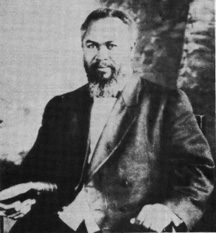
Typically these Pentecostal churches were led by strong personalities, and this religious movement allowed both men and women to pastor. It didn't discriminate as to race either. William Seymour, the pastor of the little church on Azuza Street where most say the modern Pentecostal movement started was an African-American. Many of the leaders, especially in the Pentecostal Assemblies of the World denomination, were black. There was an egalitarian value to this movement.

The movement was also marked by both personal demands for "holy" living, which usually meant that Pentecostal believers avoided the "worldly" entertainments of the day and strict prohibitions against alcholic beverages, and by ecstatic religious experiences, the most notable being "speaking in tongues" or glossolalia.

It is not within the scope of these articles to explore this historical subject thoroughly, but the above should give the reader at least a beginning in understanding the infancy of Pentecostalism.

As a former Pentecostal layperson and as a former pastor of a Pentecostal church, I owe a debt to my upbringing. These folks taught me the name of Jesus and shaped me to be both passionate for God and devoted to Him.

The good I see in Pentecostalism, and the reason I believe that the movement can be of great help to Christians in the West in rediscovering an Orthodox Christian faith, is that:

First, Pentecostalism throws into start relief one of the fundamental poverties of Western Christian theology - The Person of the Holy Spirit. A whole series of books could be written to talk about this point alone. When the West failed to balance the sterile effects of rationalism with a doctrinally and patristically informed mysticism, it set itself up for just the kind of pendulum swing it now sees in Pentecostalism. The human soul demands intimacy with God, and this intimacy is meant to be as real and as knowable as God is Himself. Reducing the faith to mere assent to propositional statements falls into the heresy of Docetism.

Second, Pentecostalism reinforces a sense of "mission" in their adherents. The whole point of receiving this "power" from the Holy Spirit was never just to make a person "feel good," but to set that very person free to win the lost and spread the Good News. This movement is now sweeping through Central and South America, the African continent, and even in secularized Europe and the United States challenging the religious establishment everywhere it goes to try to match its missionary zeal.

Finally, Pentecostalism dares to believe in miracles and God's direct intervention into the lives of everyday people. This "expectation" of God's work in a person's daily life makes God more than just a far off deity keeping score of your good and bad deeds. This God is a God Who cares about your sick child, your dire circumstances, and your eternal salvation. That kind of personal faith is a source of great comfort and encouragement.

These positive aspects of Pentecostalism are certainly not exclusive to this very young movement, but with the phenomenal growth of Pentecostalism, it certainly is important to note since your neighbor or even a relative is probably involved or touched by the Pentecostal movement.

Next, The Fire Fails

A GOOD POST FROM FR. STEPHEN


Here's a break from my ramblings about Pentecostalism in the form of a thought provoking post from Fr. Stephen at Glory To God For All Things.


Passing on the healthy faith of Orthodoxy to the next generation is our task. As a father, I cannot tell you the fear that drives me to my knees asking for both forgiveness for my shortcomings and mercy for my children and grandchildren, that, in spite of my mistakes, they embrace and be embraced by the wise faith of the afthers.


Lord Jesus Christ, Son of God, have mercy upon me, the sinner.

Wednesday, November 22, 2006

THE FIRE IS KINDLED


Pentecostalism is poised to become the dominant expression of Christianity in the West. The phenomenal growth of Pentecostal and Charismatic churches as well as the mainstreaming of Charismatic worship "styles" means that Pentecostalism and its emphasis on the immediate and intimate experience of the Presence of God in a believer's life is fast becoming normative for the vast majority of Western Christians.

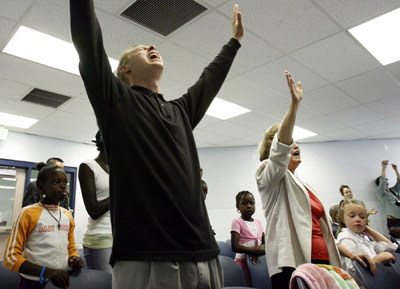
I remember years ago as a boy in a classical Pentecostal church (Assemblies of God) hearing about the non-pentecostal churches in our area. They thought we were crazy and they warned their people to stay away from "those people." Now, those same non-pentecostal churches are singing worship choruses during services and their people are lifting their hands as they sing as a sign of worship. Eyes closed, hands raised, these people in these non-Pentecostal churches are following the successful and packed Pentecostal churches they see around them. In less than 30 years the influence of Pentecostalism has gone mainstream.

The vast majority of so called "mega-churches" are Pentecostal or Charismatic in nature.

As a former Pentecostal pastor, some have asked me if there is any benefit I see in my previous Pentecostal world.

As I think of this, I remember a relative of mine asking me if I'd ever consider returning to the Pentecostal fold. He asked in hopes of finding something that might convince me to abandon my "foolish" journey to Orthodoxy. I had to smile when he asked, knowing his sincerity and honest desire to "rescue" me from my folly. He really meant well. He really loved me and wanted the best for me.

But I had to look him in the face and say there was no way I'd go back after having discovered the "treasure hidden in the field." I had "sold all I had" to "buy" this field and there was no need to go back.

I am grateful for my Pentecostal background but would have to actually "unlearn" much of what I have learned over the subsequent years to be able to return to what I believe is an inherently childish Christian theology.

Having said that, I would like to discuss briefly where I see the great value of Pentecostalism in remedying some theological poverty in the West.

One of the main reasons for the Protestant Reformation and the Enlightenment (mutually and historically connected events) was the scholasticism of the Roman Catholic world at the time. Scholasticism, in my opinion, was neither good nor bad, but, as with most historical developments, had both positive and negative consequences.

One of the negative consequences was the emphasis on a legalistic framing of theological truths.

It is no surprise that the vast majority of the Protestant Reformers were Augustinians. And it was the Augustinians who were at the forefront of the Scholastic movement in Roman Catholicism. There are sufficient numbers of Orthodox critics of Blessed Augustine, but I won't join their chorus. However, I am convinced that the theological system initiated by this great doctor of the Undivided Church had tragic consequences centuries after the passing of this great man. Consequences unintended by him and certainly unforeseen.

The Protestant Reformation accepted the theological system of the day from the Roman Catholics lock, stock, and barrel. They simply came up with different answers to the same questions, hence the split in the Western Church. What then developed historically was a theological system that was left intact and unquestioned by the interlocutors. The fight was about the answers to established questions and not about the theological questions themselves.

Soon after the Reformation (some would call it a Revolution, the first of many more to come) there were divisions among the Reformers all along the same rationalistic and theological framework already accepted.

The results of this religious development rocked along for several centuries until the Methodist movement in England and the sorted "Awakenings" that occurred in Great Britain and then in the United States. These "revivals" of religious fervor were always marked by demonstrative displays, whether it was the "mourner's bench" at the front of the church buildings that later developed into the "altar call" area in the front of many Pentecostal churches, or the ecstatic displays chronicled by reporters of these "Awakenings" during the height of these "outpourings." The people were hungry spiritually and gifted orators were able to whip this "hunger" into a frenzy of religious demonstration which turned into periods of religious devotion for a time. These movements also has a sociological component as well, reaching the poor and "great unwashed" masses with both a sense of hope and spiritual fulfillment.

But then there was a "need" for another "revival" when the devotion waned, as it always had in the past.

What followed was a successive number of "revival" movements that spawned whole new denominations.

The so called "holiness" movement so important in the initial revival work of the Wesley brothers of Methodism developed into new "holiness" movements meant to either "recapture" the purity of the initial Methodist movement or to restore the perceived "power" of the "first century church." At the end of the 19th century several revival movements claimed to have rediscovered the "missing theological truth" that would propel the Christian message forward, and all of these movements depended on touching that part of the human soul that longed for true intimacy with God through Christ.

But the hunger of the human heart was still unsatisfied by these movements and the theological underpinnings of these various revival movements still left many cold. Especially when the natural maturing sociological pressures were brought to bear on these new Christian movements.

The beginning of the 20th century was then ripe in the West for "another" revivalistic movement, both spiritually and sociologically.

Next, the Pentecostals emerge.

Thursday, November 09, 2006

STRANGE FIRE

Recently, Dr. Vincent Synan, Dean of the Divinity School and Regent University and long time historian of the Pentecostal and Charismatics movements, commented on the explosive growth of the Pentecostal movement across the increasingly Christian Southern Hemisphere by saying that those who want to deal with Christians will not be able to ignore the Pentecostals since they are on track to become the predominant expression of the Christian faith in this growing part of the world.

Just a few days ago the New York Times published a story concerning a recent scientific study on the brain activity of someone while they spoke in tongues. As an aside, one wonders why the Times cannot hire an editor who knows enough about the religious world to know that Pentecostal is not spelled "Pentacostal!"

As a former Pentecostal pastor, I was once asked if I still speak in tongues now that I have converted to Eastern Orthodoxy. Having been raised in this sub-culture of the Christian faith, I was blessed to be pastored by a Pentecostal pastor who was also open to the wider Evangelical movement. He taught us to value education (not a widely held opinion in the older versions of Pentecostalism) and he taught us to learn from the wider Christian world. While he regrets my conversion to Orthodoxy, he has never treated me with anything less than love and respect.

Oh, and as for the question mentioned above, the answer is "no" I no longer speak in tongues, unless you consider liturgical Greek a gift of the Spirit.

I contend that the growth of Pentecostalism and the less strident Charismatic movement is a result of a theological poverty in Western Christianity that can be seen as early as the "filioque" controversy and the unintended theological consequences that followed. The emphasis of the West on rationalism and the weak and sometimes bizarre forms of mysticism that developed in the West gave rise to both the over reaction and sad necessity of the Reformation which gave rise to the even more rationalistic movements of Calvinism and legalistic, sterile, piety of the 1st and 2nd so-called "Great Awakenings. All of this led to the subsequent Holiness movements of the 19th century along with the multiplying of Christian "denominations" on the American continent, and eventually led to the outbreak of the Pentecostal movement at the turn of the 20th century.

The human longing that gave birth to the Pentecostal movement is not bad in itself. The fundamental and basic hunger that is addressed by Pentecostalism is a desire for intimacy with the Uncreated God. This is good and God-given. We were meant for intimacy with the Divine.

But the theological poverty that was the atmosphere of the birth of Pentecostalism guaranteed that the very good desire would be quickly corrupted by weak theological support. And the movement bears this out. All one has to do is turn on religious TV to discover both old and new heresies finding fertile ground in the hearts of ungrounded and disconnected Pentecostal believers.

One of the earliest heresies was the so-called "Oneness" heresy concerning the doctrine of the Trinity. Once again, the weak theological grounding of Western theologies concerning the Trinity produced the natural over reaction of some in the young Pentecostal movement to receive the "revelation" of the oneness of the Godhead. They began to teach a form of "modalism" and insist that God is not a trinity of Persons, but only One Person - Jesus. Beginning with the "new issue" of baptism only in the name of Jesus, these often sincere and fervent believers, cut off as they were from the wise theology of centuries of Christian theology, made it up as they went along.

One might have hoped that as the movement matured it would outgrow the excesses of its past, but the Oneness Pentecostals actually make up a third of all the Pentecostals in the world. The recent movie "Jesus Camp" is an example of both the biased view of the secular world toward people of faith and the easy target Pentecostals make of themselves by due to their being cut off from the wise and sobering theology of the Orthodox Christian faith.

But weak theology on the doctrine of the Trinity is not the only "strange fire" that burns in the fields of Pentecostalism. The so-called "Prosperity Gospel", the hyper-individualism that seems to reign within the movement and all its offshoots, the emotionalism that leads to nothing more than religious sentimentalism, and even the weakness of dependence on ecstatic experiences that even seem to feed a tendency toward sexual immorality, can all be found in abundance in Pentecostal movements.

Reading this you may wonder if I see any good in my former Pentecostal roots. You may be surprised to read that I consider Pentecostalism the greatest hope for Western Christianity to correct the theological mistakes of its past. I am convinced that Pentecostalism is God's gift to the West to draw Western Christianity back to a more ancient and healthier theological experience with God. Pentecostalism is the poor man's mysticism, and, as I said above, a clear cry for intimacy with God. I am indebted to my Pentecostal roots for fanning the flames of this desire for intimacy for God and for an experience in Christian community I cherish to this day. It eventually led me home to the Orthodox Church where, instead of burning my spiritual house down with "wild fire", I found a wise fireplace for the fire kindled in my heart by my Pentecostal upbringing. Thank you, Brother Holder and Open Bible Tabernacle. I shall be in your debt forever.

But the only remedy for the spiritual sicknesses that pervades Pentecostalism is a return to, or perhaps a discovery for the first time of, the wisdom of the Undivided Church. This must include rigorous theological work that take seriously the truth that we cannot truly understand what the Holy Spirit is saying to His Church today unless we understand what He has said to His Church in the past. The foolish behavior of making final choices about deep theological truths before we have gathered all the relevant theological evidence has produced too many spiritual casualties to be allowed to continue.

Pentecostalism is not going away. Christians from the more ancient traditions of the Church had better become well acquainted with this religious movement because societies are increasingly affected by this religious phenomenon. Pentecostals must abandon the prideful notion that their movement dropped out of heaven completely disconnected from the historical realities around them. The shallow "me and Jesus got our own thing going" mentality will never lead to anything more than a perpetual spiritual kindergarten. In the end, Pentecostalism may find itself increasingly dissimilar from Christianity.

Finally, as history shows, the Church eventually comes to grip with theological truths in the face of heretical threats. May the blessed and live-giving Holy Spirit give courage to the hearts of His people to pas on a robust and healthy Christian faith to future generations. The souls of precious and God-loved persons are at stake here.

Friday, November 03, 2006

THE WEAKNESS OF STRENGTH


Dear Ones,
I have just enjoyed a post on another blog. It is written by Fr. Stephen Freeman.

Please read it and perhaps together we can learn the power of St. Paul's lesson in learning how to rejoice over weaknesses rather than strengths. Can it really be true that "when I am weak, then I am strong"?

Go to "The Pillar and Ground of Truth" and contemplate what you read.

IF THERE ARE SCANDALS, IT MUST BE ELECTION TIME!


The headlines scream SCANDAL and the news stories keep pouring in. Sexual scandals, financial scandals, cover up scandals, all coming fast and furious and conveniently released close to election day. As the Church Lady would say "Isn't that special."

We are approaching, what I believe to be, one of the most important elections in our recent history. It is an election that will be closely watched by our friends and our enemies. As our world continues to "shrink" and information technology continues to send immediate messages all around the world, we cannot ignore the messages our elections communicate to others.

As the world's only super power left, our elections mean more than just local politics. We Americans are fast losing the luxury of believing "all politics is local." It isn't. Not any more.

Because of this I trust that sober citizens will avoid falling into the trap of the incessant scandals meant to suppress this or that voting block. Don't allow the failings of humans to distract you from supporting policies that you believe in.

Every human vessel is made of clay and is prone to failing to live up to the ideals we all say we believe. But that does not negate the ideals themselves. It just shows that we humans are better at preaching than living, but who isn't.

This is not to excuse the guilty. Not at all. Those who make wrong choices have to live with the consequences of those choices.

But real policy differences exist between the political parties today, and I, for one, refuse to ignore this.

Innocent and voiceless children are still being aborted in this country. Our national borders are still a leaking sieve. There are ideological enemies in this world who really want to destroy us, and no amount of appeasement will satisfy their fanatical desire to subjugate the world to their ideology. The poor still suffer from a one size fits all nanny government mentality imposed on whole generations of poor by those who lie to them. Political correctness elevates mediocrity in education and public discourse, dumbing down a generation and making them beholden to those with power, both corporate and political. Tried and time tested visions of society and morality are still being attacked all in the name of foolish and self centered narcissistic men who value themselves over all else.

This election matters. Going to the polls matters. Your vote matters. It matters to our nation. It matters to our soldiers fighting to preserve our freedoms. It matters to your children who will have to live in the world you leave behind.

There are those who cynically will use the failings of some to tempt you with the lie that your vote doesn't matter. They are wrong, and when you vote, when you stand up for the values that made this nation the envy of the planet, you preserve for another day the bright promise of freedom.

Don't let these scandals keep you from standing up and making your voice heard. There is too much at stake during this election. There is too much to lose if the forces of appeasement and weak resolve are allowed to undo the work already done. There is too much to lose if we remain silent.

Vote!